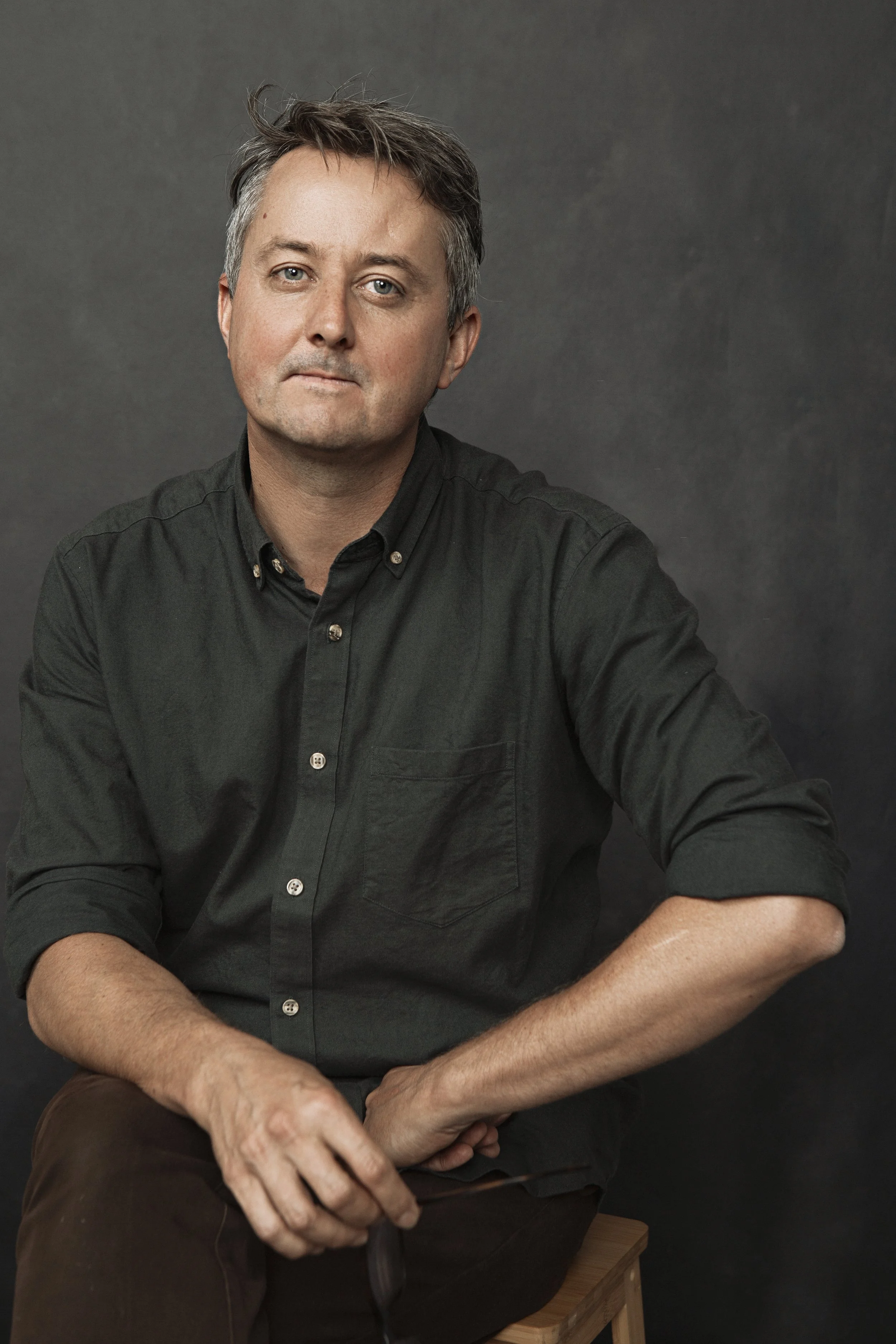
Mathew Hay | Architect & Founder of WEAVE Architecture
Originally from Gore in the south of the South Island, Mathew has lived in a variety of places throughout Aotearoa, including Auckland and Wellington, before settling in Te Tau Ihu, Nelson in 2005. After graduating from the University of Auckland School of Architecture in 2000, he spent his formative years working alongside architect Malcolm Cheadle, whose influence inspired him to establish his own practice.
For more than 15 years, Mathew ran his independent practice, Mathew Hay Architecture, undertaking a diverse range of projects, scales and complexities throughout Aotearoa, from 90 Mile Beach in the north to Castle Hill in the south, and extending into the Pacific. His experience spans residential, commercial and community projects, giving him a deep appreciation of the unique landscapes, climates and ways of living that shape architecture in this part of the world.
An early interest in furniture design and fabrication continues to influence his approach to architecture. This interest led him to design several ranges of handcrafted furniture, which were exhibited at Kura Gallery in Wellington. He retains a particular fascination with materials, how things are made and assembled, and the relationship between design intent and the realities of construction. He enjoys working through technical challenges, finding creative opportunities within constraints and exploring how thoughtful design can make better use of resources.
In 2021, Mathew joined forces with Magda Garbarczyk to establish Fineline Architecture. Together they developed a practice grounded in a shared commitment to sustainability, natural materials and thoughtful, resource-conscious design. This work further developed Mathew's interest in low-carbon construction, building performance, prefabrication and the potential for architecture to contribute positively to the environments in which we live.
Building on this experience, Mathew through WEAVE Architecture, is exploring how the principles of living systems can inform the way we design, build and inhabit our environments. WEAVE brings together architecture, material knowledge, ecological thinking and practical innovation, with an emphasis on a systems-based approach to design, material integrity and longer life cycles. It looks beyond the individual building to consider the relationships between people, place, resources and the natural systems that sustain us.
Mathew is particularly interested in making better building practices more accessible, challenging conventional approaches to construction and exploring how we can create places that deliver lasting value for people, businesses and the wider environment.
Away from architecture, Mathew enjoys ocean swimming, exploring the natural world through hiking and pursuing experimental gardening projects with his daughter.
Qualifications & Professional Registration
2026 — Certified Passive House Designer
2023 — Registered Architect, New Zealand
2011 — Licensed Building Practitioner
2000 — Bachelor of Architecture, University of Auckland
1998 — Bachelor of Architectural Studies, University of Auckland
Weave Architecture is a future-focused architectural studio based in Te Tau Ihu, Nelson.
Over the past twenty years we have explored, questioned and refined the way we design buildings. Through this journey we have developed an approach founded on living systems thinking, one that recognises a building is never a collection of isolated parts, but a network of relationships between people, place, climate, materials and ecology.
The practice is led by Mathew Hay Registered Architect and Certified Passive house designer.
Like threads woven into fabric, each design decision influences another. Orientation shapes comfort. Materials affect health. Structure informs adaptability. Energy, water, daylight and ventilation work together rather than independently. When these relationships are carefully woven together they create homes that are healthy, resilient and deeply connected to their environment.
Our role is to weave these systems into architecture that feels effortless.
The buildings we design place the wellbeing of their occupants at the centre of every decision. They use less energy, tread lightly on the earth and create spaces that support everyday life through comfort, beauty and connection. Rather than relying on complex technologies, we seek simple, enduring solutions that work in harmony with natural systems.
We believe the buildings we create today must be capable of adapting to tomorrow. As our climate changes and our understanding of sustainable living evolves, architecture must become more resilient, more resourceful and more responsive. Our systems-based approach creates buildings that are designed not only for the present, but for the generations that follow.
Home should be a sanctuary, a place that restores, protects and nurtures. Every project begins by understanding the unique qualities of the land and the people who will inhabit it. From there, we weave together the systems that allow architecture to become a living environment: one that belongs to its place, supports its occupants and contributes positively to the wider world.